By Cameron Strachan · 4 min read
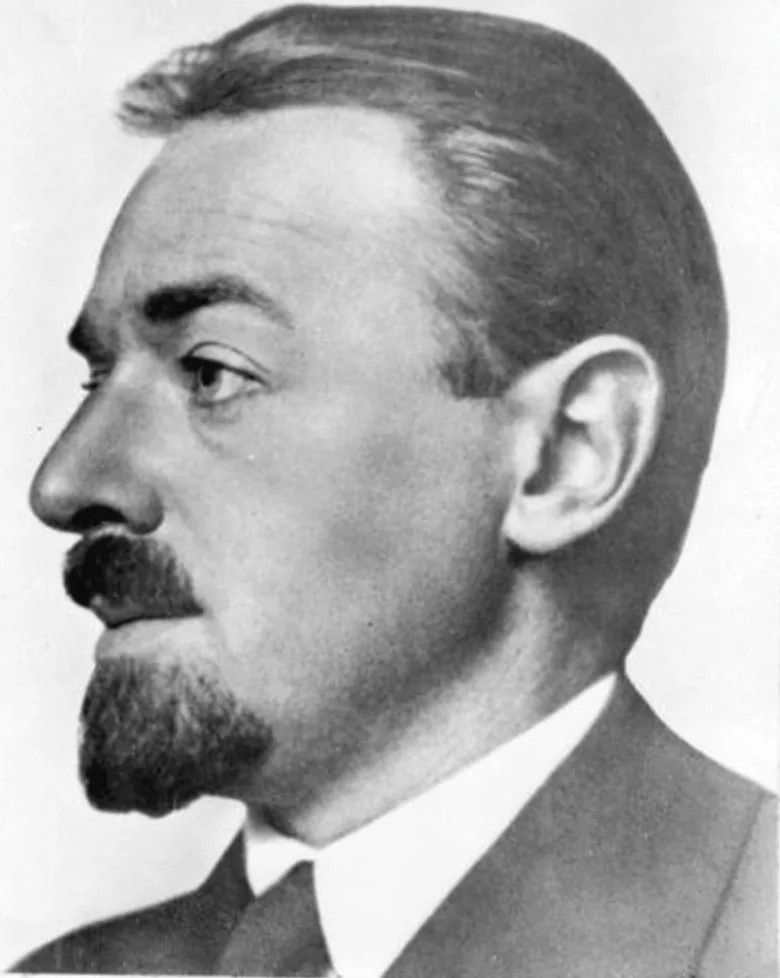
Nikolai Bernstein
The man who helped explain why your golf swing doesn't need to be identical every time.
At UNFK Golf, we have a few heroes.
One of them is a Russian scientist named Nikolai Bernstein (1896-1966).
He wasn't a golf coach.
He didn't invent a magic swing move.
And he certainly wasn't trying to sell golfers another downswing secret.
He was interested in something much more important.
How do human beings actually learn and coordinate movement?
And almost a century ago, he helped uncover something remarkable.
Something that challenges the way golf is still commonly taught today.
The Blacksmith Experiment
Bernstein studied skilled workers, including blacksmiths swinging hammers.
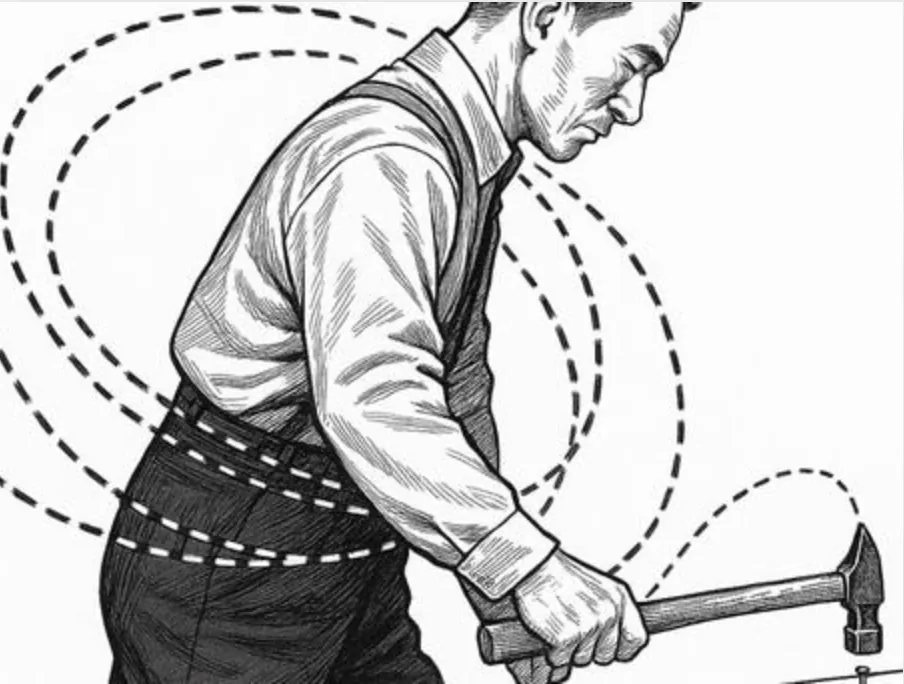
Think about what a blacksmith does.
Swing the hammer.
Hit the target.
Repeat.
Thousands upon thousands of times.
You might expect that with enough practice, every hammer swing would become almost identical.
Same arm movement.
Same joint angles.
Same timing.
But that's not what Bernstein observed.
The hammer repeatedly arrived at its target, even though the movements used to get it there varied.
The shoulder, elbow and wrist didn't have to move in exactly the same way every time.
The human movement system was finding slightly different solutions to achieve a consistent result.
This became associated with one of our favorite ideas in movement science.
Repetition without repetition.
You repeat the task.
But you don't necessarily repeat the precise movement.
Think about that for a moment.
Now Think About Your Golf Swing
How often have you been told you need a repeatable golf swing?
Same backswing.
Same transition.
Same wrist angles.
Same impact position.
Do it enough times and apparently you'll become consistent.
But Bernstein's work challenges that assumption.
The human body has numerous degrees of freedom. In simple terms, there are an extraordinary number of ways its moving parts can work together.
Even the same golfer can hit two excellent shots using slightly different combinations of movements.
And here's the really interesting part.
Much of this coordination happens beyond your conscious awareness.
You can't possibly monitor every muscle, joint, force and adjustment during a golf swing.
Nor do you need to.
The nervous system can learn to coordinate those movements through practice and experience.
And some of the natural variation that occurs can actually help learning.
So Why Are We Obsessed With Positions?
This is where we get a little cranky at UNFK.
Golf instruction has become obsessed with breaking the swing into individual parts.
The hips.
The wrists.
The shoulders.
The takeaway.
The transition.
The impact position.
Everywhere you look, there's another expert telling golfers which body part they need to consciously control.
But here's our question.
Even if the position is correct, why assume consciously trying to reproduce it is the best way to learn the movement?
A position is a snapshot.
A golf swing is a complicated, dynamic action.
And the human body has numerous ways of organizing that action successfully.
That's why we're so strongly against position-led golf instruction.
Not because biomechanics aren't real.
But because understanding what happens during a movement is not the same as knowing how to coach someone to perform it.
Where UNFK Comes In
We're pro-science.
We've studied the biomechanics, worked with sports scientists and spent years exploring how golfers actually learn.
But we don't believe golfers need to become biomechanics experts.
That's our job to understand.
Your job is to play golf.
So we've taken a different approach.
Instead of breaking the golf swing into a hundred little pieces, we start with one basic idea.
The golf swing is a throwing motion. Full stop.
Let the body learn how to organize and support the movement.
Hit shots.
Experience the results.
Allow natural variation.
Keep going.
From powerful drives to delicate shots around the green, the same underlying learning philosophy applies.
The movements change.
The task changes.
But the golfer doesn't need another collection of technical instructions for every shot.
Clear intention. Keep doing it.
Why Bernstein Is Our Hero
Bernstein didn't develop the UNFK throwing model.
And we're not suggesting his research proves that every golfer should swing exactly as we recommend.
But his work helped establish an incredibly important principle.
Skilled movement isn't simply about reproducing identical body positions. It's about coordinating movement to accomplish a task.
That's at the heart of everything we do.
We're not interested in creating golfers who can explain every detail of their golf swings.
We want golfers who can hit shots.
Who can adapt.
Who can perform under pressure.
Who can walk onto the first tee without a head full of mechanical instructions.
And who can discover just how good they can become.
So here's to Nikolai Bernstein.
A brilliant scientist whose ideas continue to influence how we understand human movement.
And one of the reasons we believe golf coaching can be so much simpler.
The science is complicated. The learning doesn't have to be.
And the whole point is to go out and play golf.
Want to Experience the UNFK Way?
You don't need to study movement science to benefit from it.
In The Golf Lie, I explain why conventional golf instruction has become so complicated and introduce a much simpler way to approach your swing.
Or start with our free introductory lessons.
No spam. No bullshit. Unsubscribe anytime.